
Tesla · 2020 - 2021
Tesla Supercharger
Staff Product Manager · Supercharger
Know before you arrive.
I created the original Supercharger Real Time Wait Time experience. I also helped open the network to non-Tesla vehicles and acquired and built the @TeslaCharging Twitter account from zero followers. It now has over 300,000.
01 · My largest contribution
Real Time Wait Time
Turn live charging data into a useful decision for the driver.
A stall available now may be occupied by the time a driver arrives. I created the original experience that showed available stalls, busy or no-wait status, and rough short, medium, or long wait estimates in the app and map pins.
- Constraint
- Occupancy and vehicle arrivals change while drivers are on the road. Updates also take time to reach the experience.
- Tradeoff
- Use clear status and rough wait ranges instead of precise minutes. Balance freshness with update latency.
- Customer value
- Give drivers a useful expectation before arrival, so they can compare charging stops and avoid surprises.
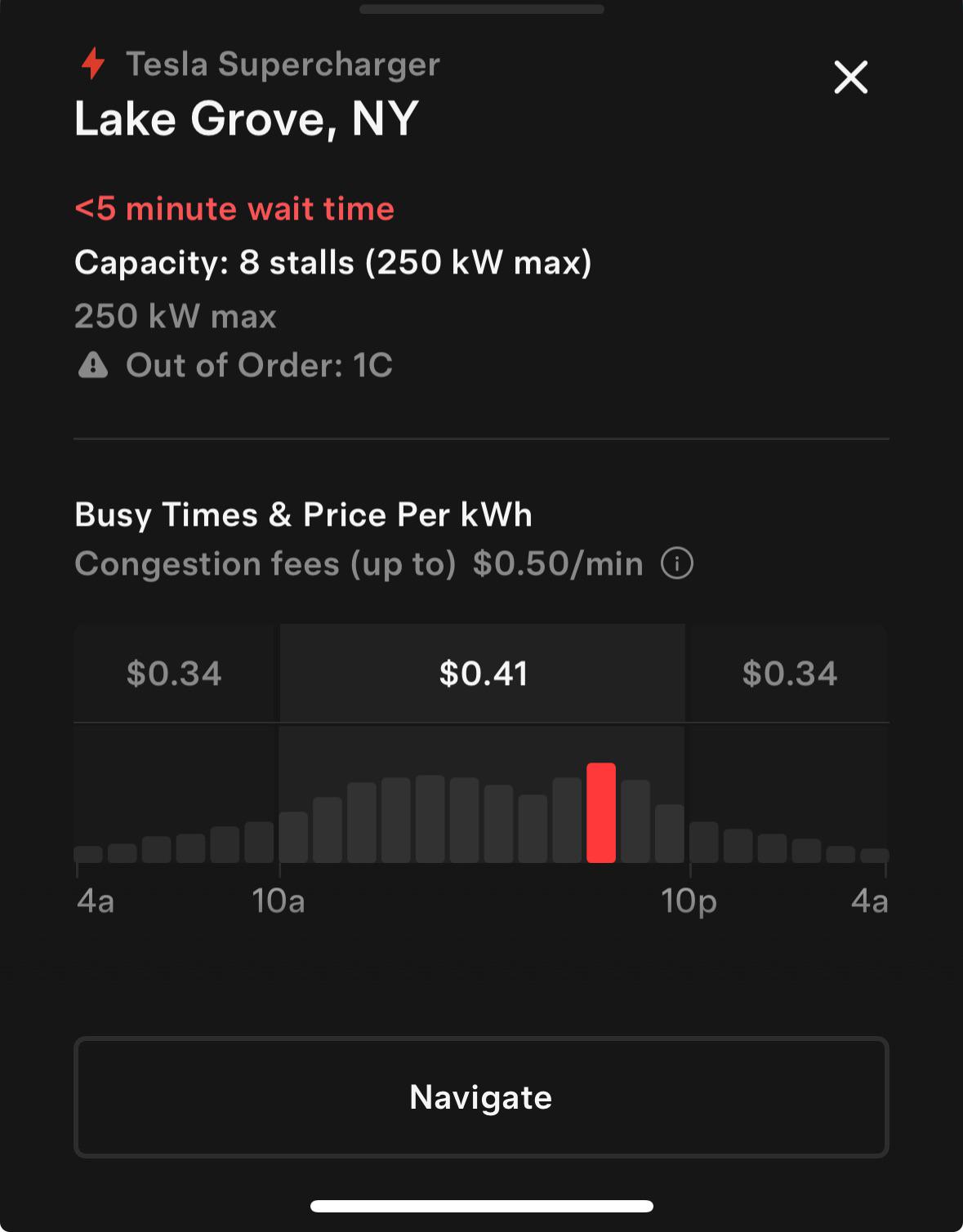
Vehicle arrival and location data
Expected demand
Simple wait ranges
I worked across vehicle UI, infotainment, mobile app, and Trip Planner teams to connect the charging data to the driver experience.
This is the original version I created during 2020–2021. Tesla's later forecasting models and virtual waitlist are subsequent developments.
02 · Opening the network
Supercharger access for non-Tesla vehicles
Open existing infrastructure to more drivers. Protect the charging experience.
I helped launch the early pilots and plugged in the first non-Tesla car during that work. The first European pilot could use existing CCS connectors, but the charging journey had to work without Tesla's in-vehicle identity, navigation, and payment integration.
The Tesla app became the entry point: find an eligible site, add a payment method, identify the stall, and start and stop charging.
View the pilot announcement ↗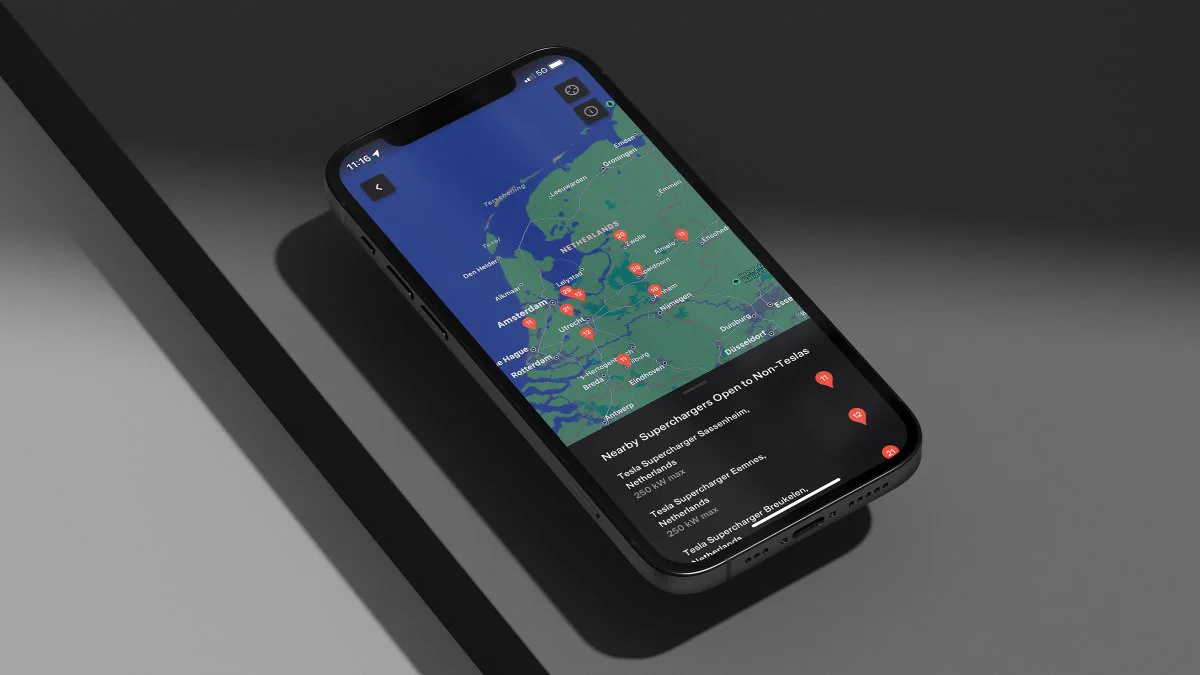
- Software journey
- Replace the vehicle's built-in charging identity with app-based authorization, stall selection, session controls, and billing.
- Rollout tradeoff
- Enable selected sites, monitor congestion, and expand where capacity allows. Account for different charge-port positions and cable reach.
- Value
- Give other EV drivers access to the Supercharger network and make more use of existing infrastructure, while protecting capacity for Tesla drivers.
03 · Building TeslaCharging
From zero to over 300,000 followers.
From daily manual posts to automated site announcements.
I acquired the @TeslaCharging Twitter handle and built the account from zero followers. It now has over 300,000 followers. I established the daily workflow: identify newly opened sites, select photos, verify stall counts and map links, and publish a consistent announcement.
During my time at Tesla, I built the automation that turned internal charging tools into the source for those posts. Site readiness, location, stall count, and the Find Us link came from the operational record.
Visit @TeslaCharging ↗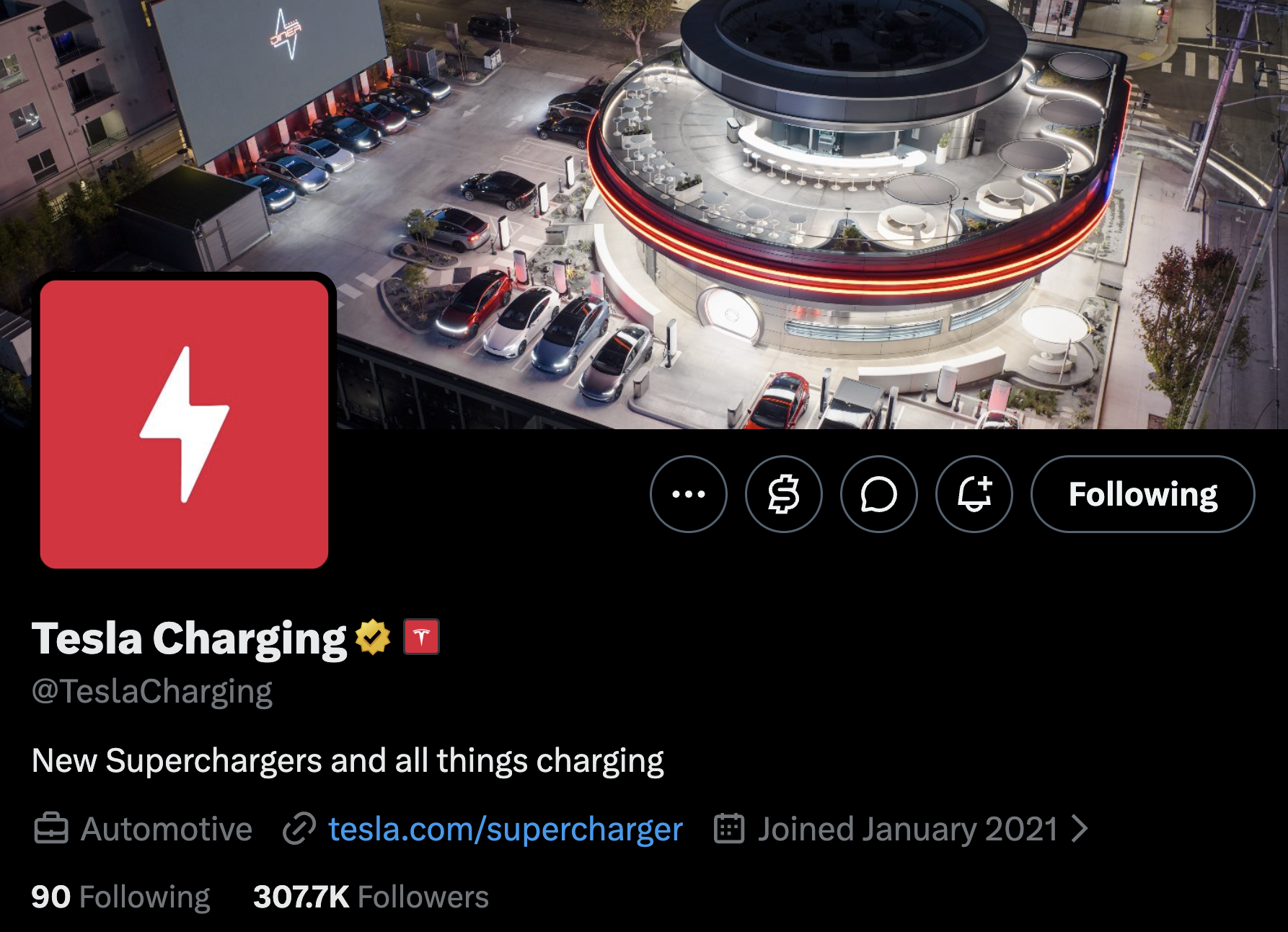
- Verified site data
- Require a live, public site and matching location, stall count, and map identifier. Block mismatched records and premature announcements.
- Approved photos
- Validate the image before publication. Prevent wrong-site, construction, or unapproved photos from reaching the public feed; retain human checks for exceptions.
- Timing and duplicates
- Publish when the site is ready for drivers, with checks that prevent repeat announcements for the same location.
The result was a repeatable announcement process that could scale with network expansion without someone writing every post by hand. Drivers could see where a site had opened, how many stalls it had, and where to find it.
Growth continued after my time at Tesla; the manual workflow and publishing automation were work I built during 2020–2021.
Impact across my Supercharger work
- Reduced charging wait times
- Increased network utilization
- Increased network profitability
Additional work · March 2021
Bitcoin payments on Tesla.com
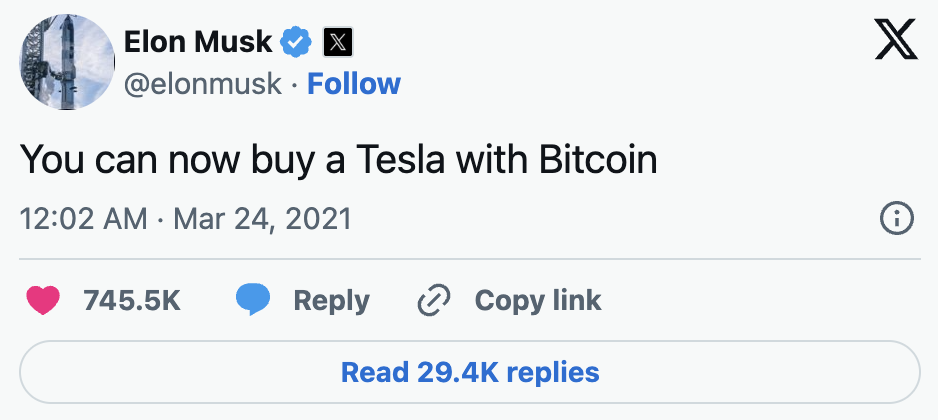
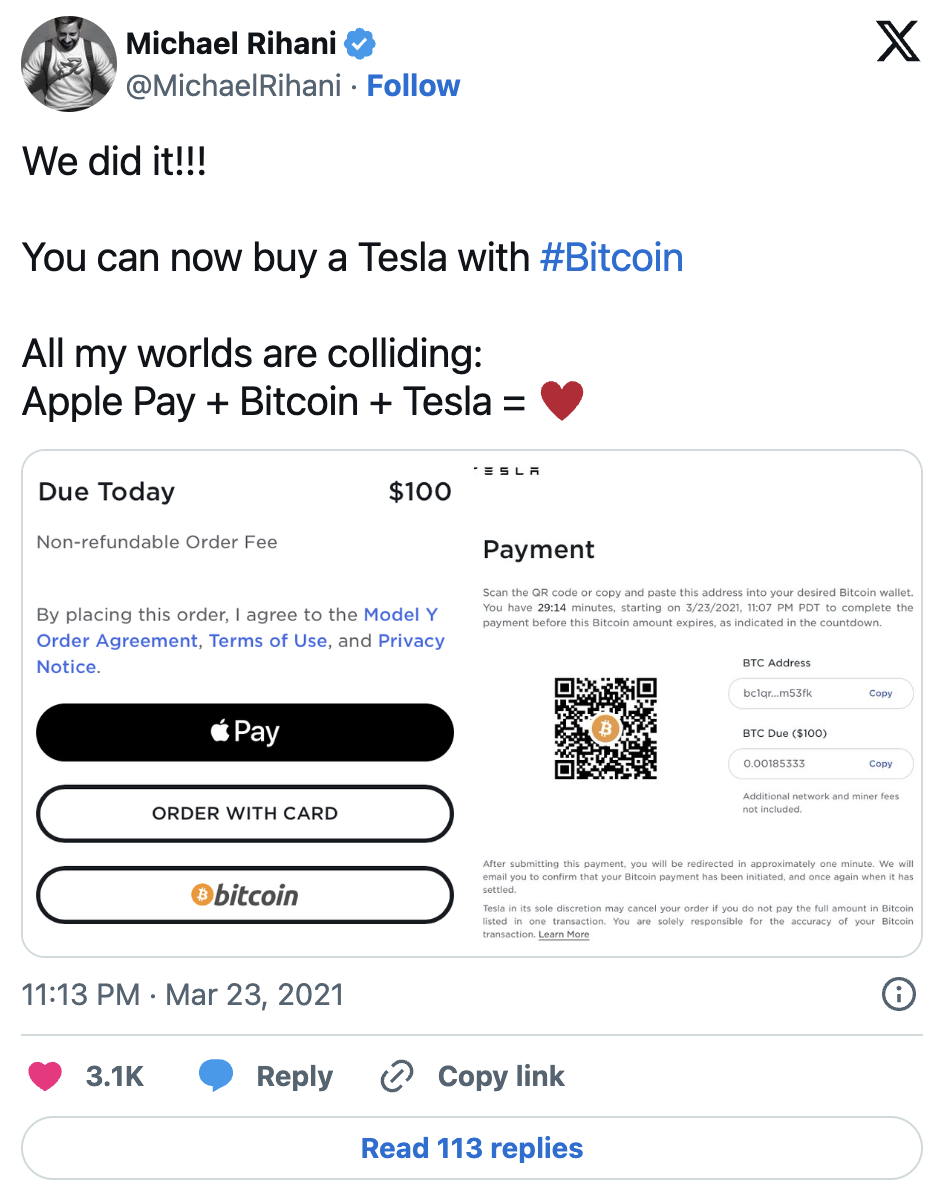
I helped integrate bitcoin payments into Tesla.com. Customers could choose Bitcoin alongside card payment and Apple Pay in the vehicle-order checkout.
Orders remained priced in USD. The checkout generated a Bitcoin amount, payment address, QR code, and a countdown for the quote. Payment status distinguished an initiated transaction from settlement, with confirmation emails for each stage.
Tesla launched the option in March 2021 and paused it in May 2021. Tesla's 2021 filing ↗
Broader ownership
Software across the charging experience
I led Supercharger software and UX across vehicle UI, payments, web, and internal charging tools, partnering with infotainment, mobile app, and Trip Planner teams.